Every single day, more than $7.5 trillion changes hands in the global currency market. That’s not a weekly figure or a monthly total — it’s the daily trading volume of the Foreign Exchange market, better known as Forex. To put that in perspective, it dwarfs the combined turnover of every stock exchange on the planet.
Yet despite its enormous scale, Forex remains one of the most accessible financial markets in the world. You don’t need a seat on an exchange, a six-figure account balance, or a finance degree to participate. What you do need is a solid understanding of how it works, a clear strategy, and the discipline to execute it.
This guide is your starting point. Whether you’ve never placed a trade in your life or you’ve dabbled in stocks and want to understand currency markets, everything you need to know to begin your Forex journey is right here.
What Is Forex Trading?
Forex — short for Foreign Exchange — is the global marketplace where currencies are bought and sold against one another. Unlike stock markets, which are tied to specific exchanges and operate during set hours, Forex is a decentralised, over-the-counter (OTC) market that runs 24 hours a day, five days a week, across financial centres in Sydney, Tokyo, London, and New York.
The concept at its heart is straightforward: you exchange one currency for another, speculating on whether one will rise or fall in value relative to the other. If you believe the Euro will strengthen against the US Dollar, you buy Euros (and simultaneously sell Dollars). If the Euro rises as you predicted, you close the trade at a profit. If it falls, you take a loss.
This is the same basic mechanism that happens whenever you travel abroad and convert your home currency at the airport — except in Forex trading, you’re doing it through a broker, using leverage, with the specific goal of profiting from the exchange rate movement.
📎 Learn more about how Forex works at Investopedia
Who Trades Forex?
One of the things that makes Forex unique is the sheer diversity of participants in the market. It’s not just retail traders sitting at their laptops — it’s a vast ecosystem of institutions, businesses, and individuals all interacting simultaneously:
Central Banks — The most powerful players. Institutions like the US Federal Reserve, European Central Bank, and Bank of England influence currency values through interest rate decisions and monetary policy. Their actions can shift markets by hundreds of pips in seconds.
Commercial Banks — Large banks such as JPMorgan, Deutsche Bank, and Barclays conduct enormous volumes of currency transactions on behalf of clients and for their own trading desks. The interbank market forms the backbone of the entire Forex ecosystem.
Corporations — Multinational companies constantly exchange currencies to pay overseas suppliers, repatriate profits, and hedge against exchange rate risk. A US company selling products in Europe, for example, receives Euros but needs Dollars — that creates constant demand for currency conversion.
Hedge Funds and Investment Managers — Sophisticated institutional traders who take speculative positions on currency movements as part of broader investment strategies.
Retail Traders — That’s where you come in. Individual traders accessing the market through online brokers, typically using leverage to control larger positions than their account balance alone would allow.
Understanding that you’re trading in a market alongside these institutional giants is important. It shapes how the market behaves, where liquidity concentrates, and why certain price levels attract so much attention.
Understanding Currency Pairs
In Forex, you never trade a single currency in isolation. You always trade one currency against another — which is why everything is expressed as a currency pair.
A currency pair is written like this: EUR/USD. The first currency (EUR) is called the base currency. The second (USD) is the quote currency. The price tells you how much of the quote currency you need to buy one unit of the base currency.
So if EUR/USD is trading at 1.0850, it means 1 Euro buys 1.0850 US Dollars.
The Three Categories of Currency Pairs
Major Pairs — These involve the US Dollar paired with one of the seven most traded currencies in the world. They account for the majority of global Forex volume and typically offer the tightest spreads (lowest trading costs).
Examples: EUR/USD, GBP/USD, USD/JPY, USD/CHF, AUD/USD, USD/CAD, NZD/USD
Minor Pairs (Cross Pairs) — These don’t include the US Dollar but involve other major currencies paired against each other.
Examples: EUR/GBP, EUR/JPY, GBP/JPY, AUD/NZD
Exotic Pairs — One major currency paired with the currency of an emerging or smaller economy. These tend to have wider spreads and lower liquidity, making them riskier and more expensive to trade.
Examples: USD/TRY (US Dollar / Turkish Lira), EUR/ZAR (Euro / South African Rand), GBP/SGD (Pound / Singapore Dollar)
For beginners, sticking to major pairs — particularly EUR/USD and GBP/USD — is the wisest starting point. These pairs have the highest liquidity, the most available analysis, and the most predictable behaviour around key price levels.
📎 Full breakdown of currency pairs at BabyPips
Essential Forex Terminology Every Beginner Must Know
Walking into the Forex world without knowing the language is like arriving in a foreign country without knowing a word of the local tongue. Here are the terms you’ll encounter constantly:
Pip
A pip (Percentage in Point) is the smallest standard price movement in a currency pair. For most pairs, a pip is the fourth decimal place — so a move from 1.0850 to 1.0851 is one pip. For JPY pairs, it’s the second decimal place.
Pips are how traders measure profit and loss. If you buy EUR/USD at 1.0850 and it rises to 1.0950, that’s a 100-pip move in your favour.
Spread
The spread is the difference between the buy price (ask) and the sell price (bid) quoted by your broker. It’s the primary way brokers make money on retail trades. A tighter spread means lower trading costs. EUR/USD, being the most traded pair in the world, typically has some of the tightest spreads available — often less than 1 pip with a good ECN broker.
Leverage
Leverage is one of the most powerful — and most misunderstood — features of Forex trading. It allows you to control a much larger position than your actual account balance.
For example, with 1:100 leverage, a £500 deposit gives you control over £50,000 worth of currency. This magnifies both profits and losses equally. A 1% move in your favour with 1:100 leverage doubles your money. A 1% move against you wipes out your entire deposit.
Leverage is a tool, not a guarantee. Used responsibly with proper risk management, it’s powerful. Used recklessly, it’s account-destroying.
Lot Size
Forex trades are measured in lots. A standard lot is 100,000 units of the base currency. A mini lot is 10,000 units. A micro lot is 1,000 units. Most retail brokers allow you to trade in micro or mini lots, making it possible to start trading with relatively modest account sizes.
Margin
Margin is the deposit your broker requires to open a leveraged position. If you’re trading with 1:50 leverage and want to open a position worth £50,000, your margin requirement is £1,000. That £1,000 is held as collateral — it’s not a fee, but it is locked until the trade is closed.
Long and Short
Going long means buying a currency pair, betting that the base currency will rise against the quote currency. Going short means selling the pair, betting the base currency will fall. In Forex, you can profit in both rising and falling markets — which is a significant advantage over many other asset classes.
Bid and Ask
The bid is the price at which you can sell the base currency. The ask is the price at which you can buy it. The spread sits between these two prices. When you open a trade, you’re immediately paying the spread — which is why your position starts slightly in the red before the market moves.
How Are Forex Profits Made?
Let’s walk through a real example to make this concrete.
It’s Monday morning and you’ve been monitoring GBP/USD. You believe the Pound is about to strengthen against the Dollar based on upcoming UK employment data. GBP/USD is currently trading at 1.2700.
You open a long position (buy) on 1 mini lot (10,000 units) of GBP/USD at 1.2700.
Two days later, strong UK jobs data pushes GBP/USD up to 1.2850 — a 150-pip move in your favour.
You close the trade at 1.2850.
Your profit: 150 pips × £1 per pip (for a mini lot) = £150 profit on a position that required only a fraction of that as margin.
Now flip it: if GBP/USD had fallen to 1.2550 instead — a 150-pip move against you — your loss would be £150. This is why risk management is not optional.
The goal isn’t to win every trade. It’s to ensure that when you win, you win more than you lose when you’re wrong. A trader who wins 50% of trades but makes twice as much on winners as they lose on losers is a profitable trader over time.
The Forex Market Sessions: When to Trade
Because Forex operates globally, the market is open 24 hours a day from Sunday evening to Friday night. However, not all hours are equal. Volatility and liquidity vary significantly depending on which financial centres are active.
Sydney Session (10:00 PM – 7:00 AM UTC) — The quietest session. The Australian and New Zealand Dollars tend to see more activity here. Low volatility, thin liquidity.
Tokyo Session (12:00 AM – 9:00 AM UTC) — Moderate activity. JPY pairs (USD/JPY, EUR/JPY, GBP/JPY) are most active. Asian central bank interventions occasionally create sharp moves.
London Session (8:00 AM – 5:00 PM UTC) — The most important session. London is the world’s largest Forex trading centre, responsible for over 30% of global daily volume. Major currency pairs see their biggest moves of the day here.
New York Session (1:00 PM – 10:00 PM UTC) — High activity, particularly in the first half when it overlaps with London. The London/New York overlap (1:00 PM – 5:00 PM UTC) is the single most liquid and volatile window of the entire trading day. This is when major economic data from the US hits the market, and when the biggest opportunities — and biggest risks — tend to materialise.
For beginners trading EUR/USD or GBP/USD, the London session and London/New York overlap offer the best combination of liquidity, tight spreads, and meaningful price action.
📎 Detailed breakdown of Forex sessions at DailyFX
What Drives Currency Prices?
Forex isn’t random. Currency prices move for reasons — and understanding those reasons is the foundation of any trading strategy.
Interest Rates
The single biggest driver of long-term currency direction. When a central bank raises interest rates, it attracts foreign capital seeking higher yields, which increases demand for that currency and pushes its value up. When rates are cut, the opposite occurs.
Economic Data
Employment figures, inflation readings (CPI), GDP growth, retail sales, and trade balance data all tell the market how healthy an economy is. Strong data generally supports a currency; weak data undermines it. This is why the economic calendar is an essential daily tool for any Forex trader.
Inflation
Higher inflation typically leads to higher interest rates (as central banks try to cool the economy), which in turn can strengthen a currency — but only if the market believes the central bank will act. Persistently high inflation without central bank response can eventually erode confidence in a currency.
Political and Geopolitical Events
Elections, trade wars, geopolitical tensions, and policy uncertainty all influence currency markets. The British Pound’s dramatic swings around Brexit negotiations are perhaps the most vivid recent example of how political events can dominate currency pricing for extended periods.
Market Sentiment
Sometimes markets move on fear, optimism, or risk appetite rather than pure fundamentals. During periods of global uncertainty, “safe haven” currencies like the Japanese Yen, Swiss Franc, and US Dollar tend to strengthen as investors flee riskier assets.
How to Get Started in Forex Trading: A Step-by-Step Path
Step 1: Educate Yourself First
Before risking a single penny of real money, invest time in learning. Read widely, study price charts, understand the terminology, and absorb the fundamentals. The resources linked throughout this guide are a solid starting point.
📎 BabyPips School of Pipsology — free beginner course
Step 2: Choose a Regulated Broker
Your broker is your gateway to the market. Choose one that is regulated by a reputable authority — the FCA (UK), ASIC (Australia), CySEC (Europe), or CFTC/NFA (US). Regulation means your funds are protected, your trades are executed fairly, and you have legal recourse if something goes wrong.
Look for: tight spreads on major pairs, fast execution, a reliable trading platform (MetaTrader 4 or 5 are industry standards), and responsive customer support.
📎 How to choose a Forex broker: Investopedia guide
Step 3: Practice on a Demo Account
Every serious broker offers a demo account — a simulated trading environment using real market data but virtual money. Use it relentlessly. Get comfortable with the platform, test your strategy, and learn how to manage positions before any real capital is on the line.
Don’t rush through this stage. Many experienced traders recommend spending at least 2–3 months on demo before going live.
Step 4: Develop a Trading Plan
A trading plan is your rulebook. It defines which pairs you trade, which sessions you focus on, what your entry and exit criteria are, how much you risk per trade, and how you’ll respond when things go wrong. Trading without a plan is gambling. Trading with one is a business.
Step 5: Start Small with Real Money
When you go live, start with a micro or mini account and trade the smallest position sizes available. The psychology of trading with real money is completely different from demo trading — and it takes time to adjust. Protect your capital while you build experience.
Step 6: Keep a Trading Journal
Record every trade: the pair, the direction, the reason for entry, the result, and what you learned. A trading journal is how you identify patterns in your own behaviour — what works, what doesn’t, and where your discipline breaks down. It’s the single most underused tool in a retail trader’s arsenal.
The Role of Risk Management in Forex
Here’s the truth that separates traders who last from those who blow up their accounts within weeks: Forex is not about predicting the market correctly every time. It’s about managing risk so that losses are survivable and profits are compounding.
The most important risk management rule is the 1–2% rule: never risk more than 1–2% of your total account balance on any single trade. If your account is £2,000, your maximum risk per trade is £20–£40. At that level, even a run of 10 consecutive losses only drawdown your account by 10–20% — uncomfortable, but recoverable.
Always use a stop-loss. A stop-loss is an instruction to your broker to automatically close a trade if it moves a specified number of pips against you. It’s your safety net. Trading without one is like driving without a seatbelt — fine until it’s suddenly not.
📎 Risk management fundamentals: Babypips
Manual Trading vs. Automated Trading (EA Bots)
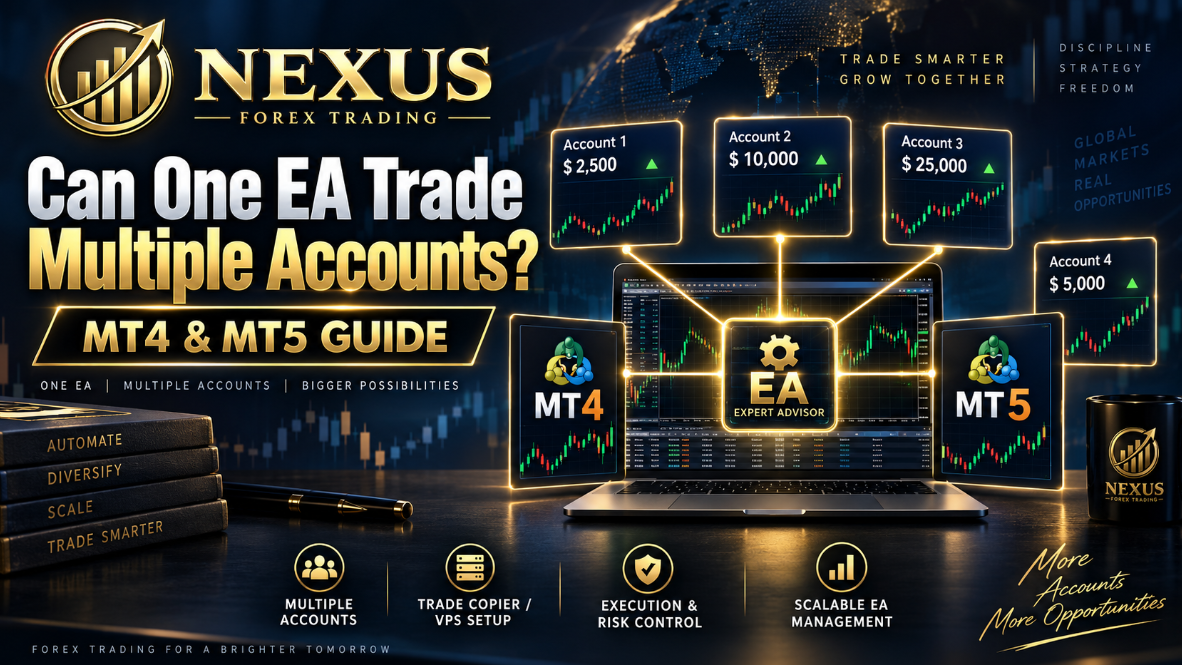
As you develop as a Forex trader, you’ll encounter the world of automated trading — Expert Advisors (EAs) or trading bots that execute trades on your behalf based on pre-programmed rules and algorithms.
Automated trading removes two of the biggest enemies of consistent performance: emotion and inconsistency. An EA follows its rules 100% of the time, never second-guessing a setup because of fear or greed, never missing a trade because it was distracted.
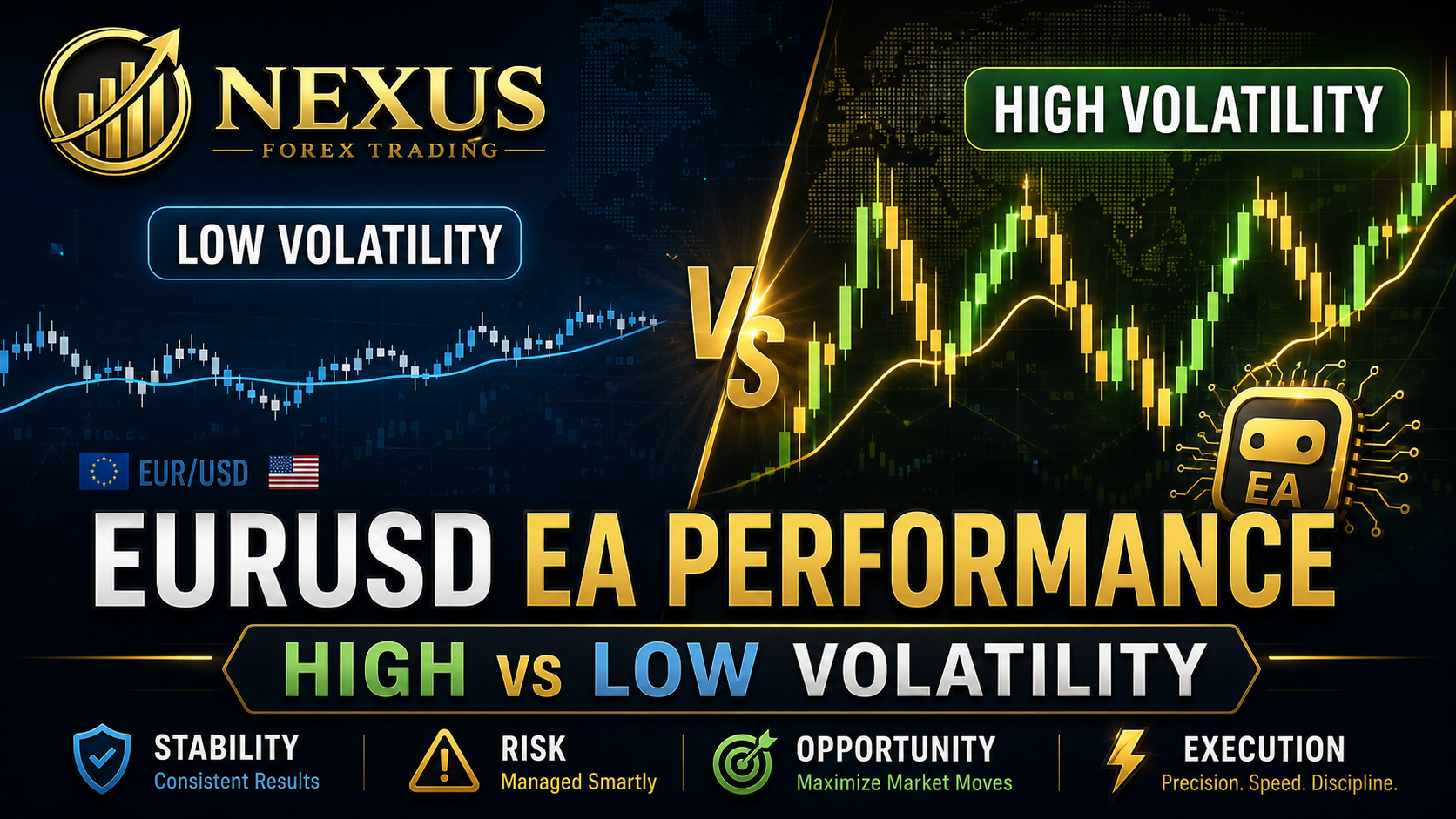
For currency pairs like EUR/USD and GBP/USD — where volatility is high, liquidity is deep, and opportunities are frequent — a well-built EA can be a powerful tool for both experienced traders looking to automate their strategy and beginners who want systematic, rules-based exposure to the market while they continue learning.
Common Mistakes Forex Beginners Make
Overleveraging — Using maximum leverage from day one is the fastest route to a blown account. Start conservatively. Leverage up gradually as your skills and confidence grow.
Chasing losses — After a losing trade, the temptation to immediately “win it back” with a bigger position is almost universal — and almost universally destructive. Stick to your plan. One loss is data. Chasing it turns one loss into a disaster.
Ignoring the economic calendar — Major data releases can send currency pairs flying in seconds. Trading without awareness of scheduled news events is like walking into traffic blindfolded.
Trading too many pairs — Beginners often feel they should be scanning dozens of pairs for opportunities. In reality, mastering one or two pairs thoroughly is far more profitable than spreading attention thin across twenty.
Expecting overnight riches — Forex is a skill, and like any skill, it takes time to develop. The traders who succeed treat it as a long-term journey, not a get-rich-quick scheme.
Your Next Step Starts Here
You’ve now got a genuine foundation — the vocabulary, the mechanics, the market structure, and the mindset needed to take Forex trading seriously. The next step is putting it into practice with the right tools and support around you.
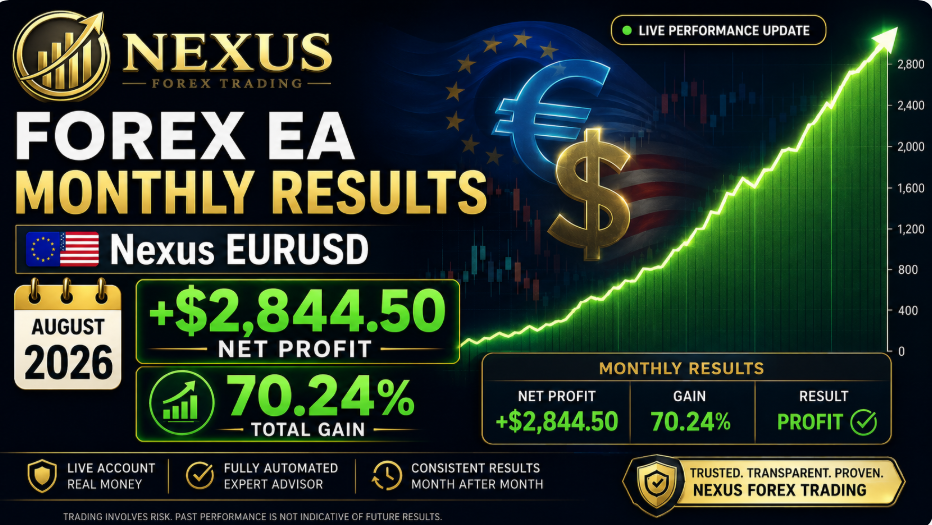
At Nexus Forex Trading, we’ve built something specifically for traders who want to trade EUR/USD and GBP/USD — the two most liquid, most opportunity-rich pairs in the world — with precision and consistency. Our EA Bot handles the execution. You manage the strategy. And with built-in risk management, it’s designed to protect your capital while pursuing consistent returns.
Whether you’re just starting out or ready to add automation to your trading approach, Nexus gives you the edge that most retail traders spend years trying to find on their own.
Get an exclusive 50% discount when you join today. Use code NEXUS50FX at checkout — and step into the market with a real advantage.
👉 Join Nexus Forex Trading Now →

Risk Disclaimer: Forex trading carries a high level of risk and may not be suitable for all investors. The use of leverage can work against you as well as for you. Before deciding to trade Forex, carefully consider your investment objectives, level of experience, and risk appetite. This article is for educational purposes only and does not constitute financial advice. Never trade with money you cannot afford to lose.